
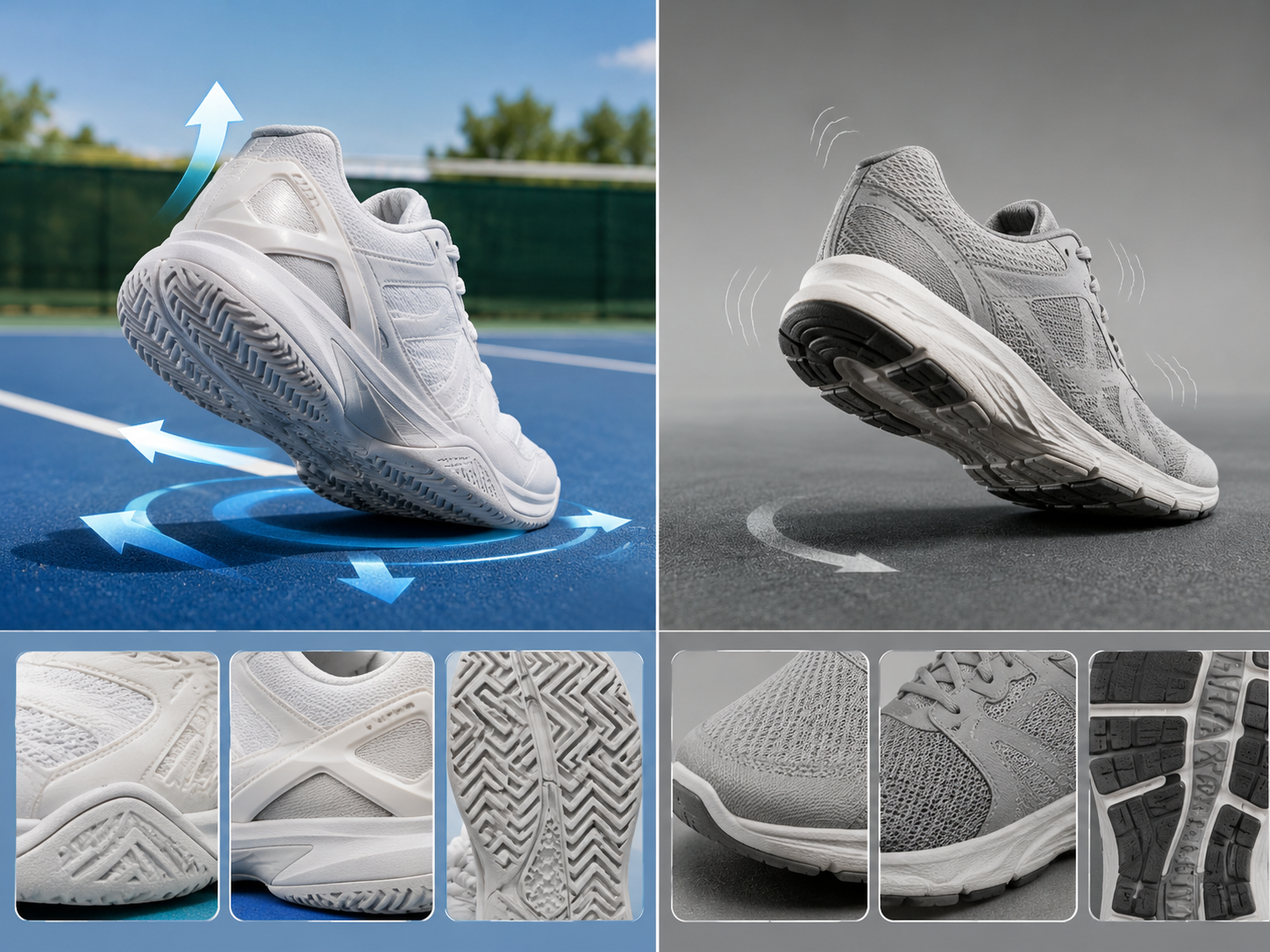
Many players spend hours researching tennis rackets but give very little thought to their shoes.
That's a mistake.
A racket helps you control the ball. Tennis shoes help you control your body. They influence stability, movement, comfort and even how confident you feel when changing direction on court.
To be honest, many recreational players only start paying attention to their footwear after something goes wrong. Maybe their feet start hurting after training. Perhaps their knees feel sore. Or they simply realise they don't feel secure during fast rallies.
Let's take a closer look at what really matters when choosing tennis shoes.
How Are Tennis Shoes Different from Regular Trainers?
At first glance, they may look quite similar.
However, tennis shoes are designed for a completely different type of movement.
Running shoes are built primarily for forward motion. Tennis shoes are designed for explosive starts, sudden stops, lateral movements and rapid changes of direction.
During a single rally, a player may sprint forward, recover backwards, move sideways and accelerate again within seconds.
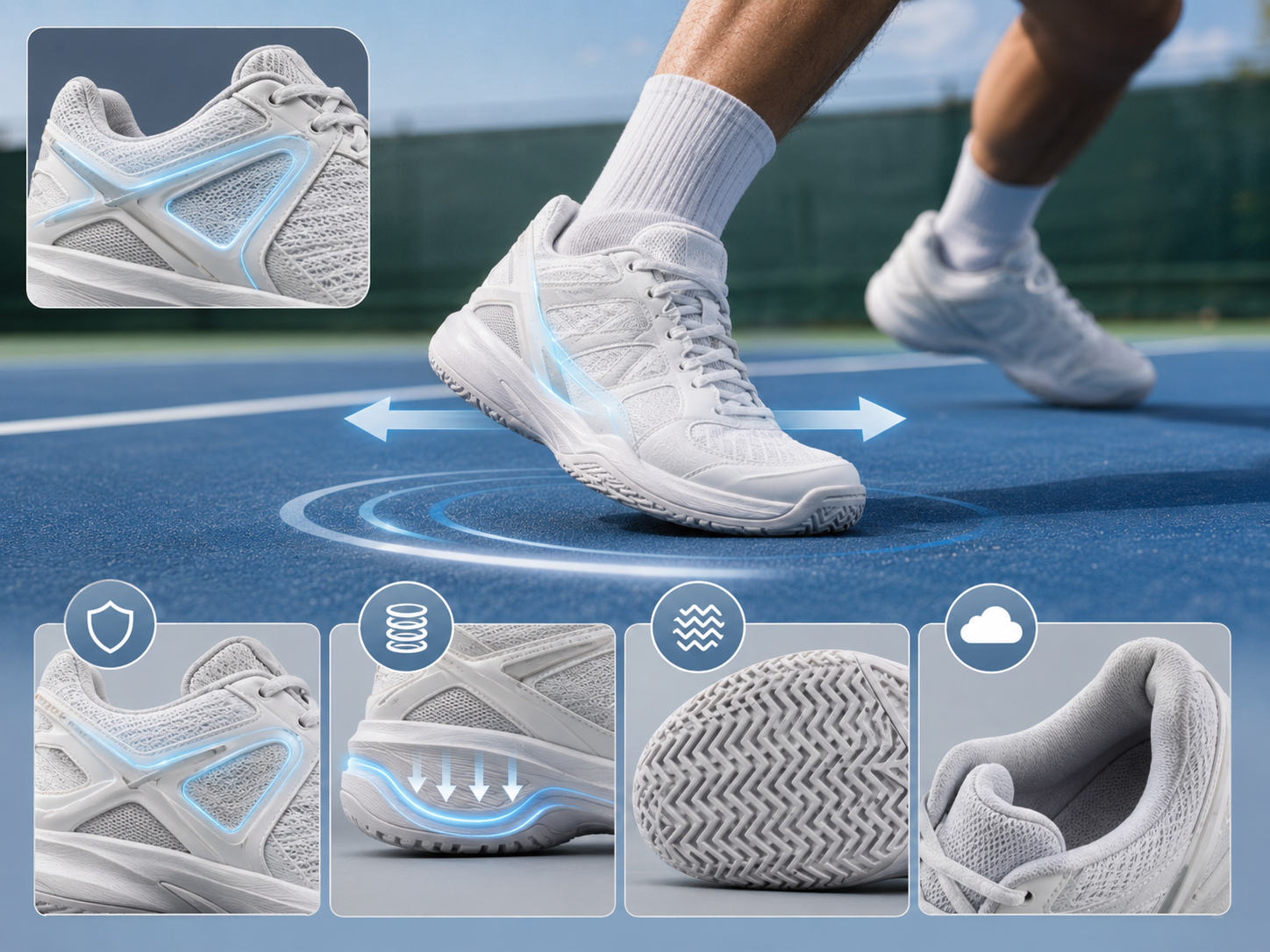
That's why tennis shoes feature:
- reinforced lateral support;
- a more stable construction;
- court-specific outsoles;
- increased durability;
- additional protection around the toe and sidewalls.
While running shoes excel on roads and treadmills, they generally do not provide the stability required for tennis.
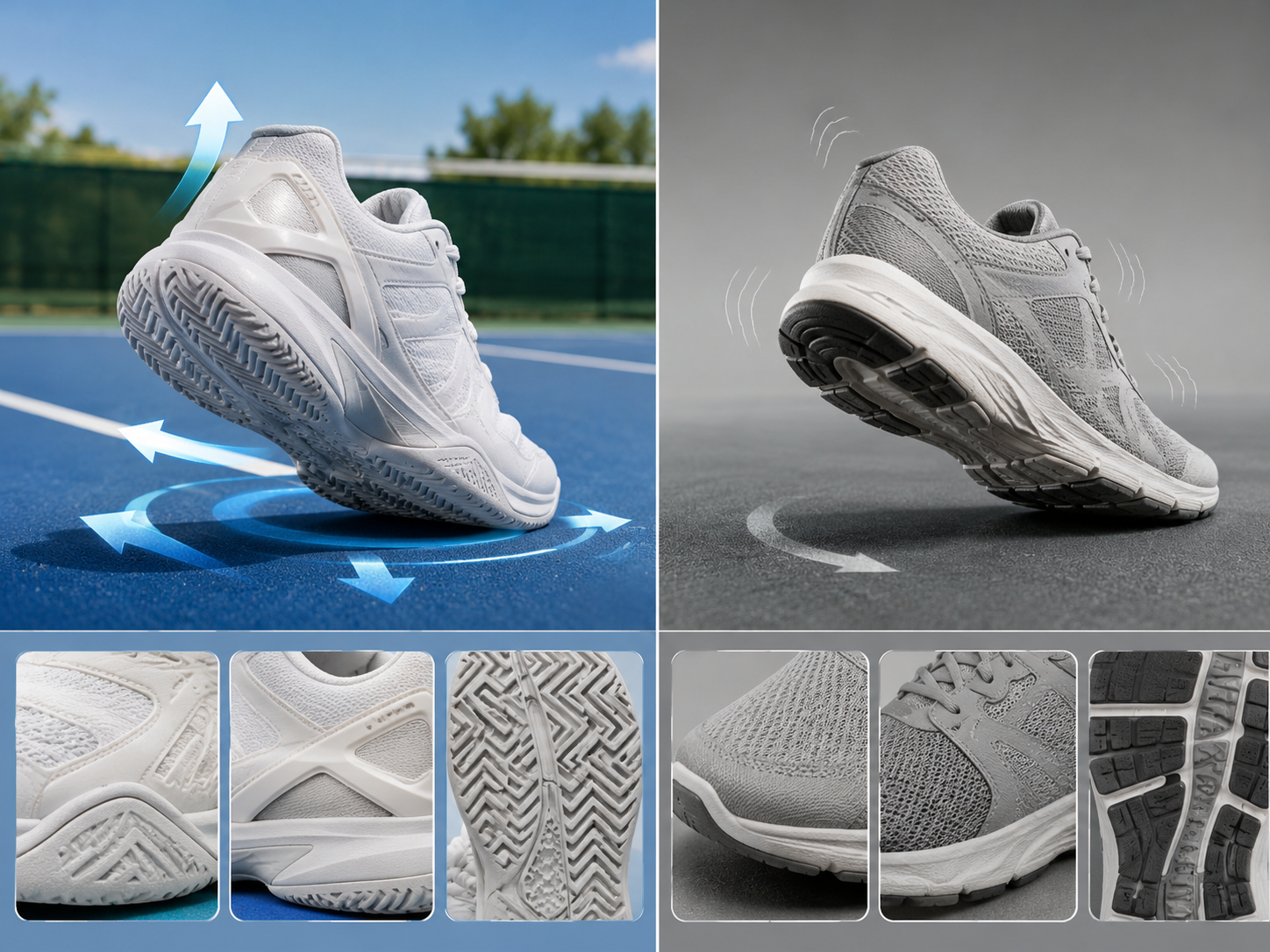
What Is the Most Important Feature in a Tennis Shoe?
If you could evaluate only one characteristic, focus on stability.
This may sound surprising. Many players immediately think about cushioning or weight.
But tennis is built around quick directional changes.
Even a very comfortable shoe can become problematic if your foot moves excessively inside it during play.
Good stability helps keep the foot secure and allows players to move confidently without feeling unstable during aggressive movements.
For most recreational players, stability is the single most important characteristic to prioritise.
What Else Should You Look For?
Cushioning
Tennis places considerable stress on the body, especially on hard courts.
Effective cushioning helps reduce impact forces transmitted through the lower limbs and can improve comfort during longer training sessions.
Grip
The outsole must provide reliable traction without restricting natural movement.
Too little grip can cause slipping. Too much can sometimes place unnecessary stress on the knees and ankles.
Comfort
Even the most advanced tennis shoe is useless if it doesn't fit your foot properly.
Comfort should always be one of your top priorities.
Getting the Right Size
This sounds straightforward, yet it's one of the most common mistakes players make.
Shoes that are too small may feel acceptable during a brief fitting session but become uncomfortable after an hour on court.
Shoes that are too large can lead to rubbing, blisters and reduced stability.
A good rule of thumb is to leave approximately 5–10 mm of space between your longest toe and the front of the shoe.
Remember that feet tend to expand slightly during exercise, particularly during long matches or warm weather.
If you're between sizes, try both and spend a few minutes walking around before making a decision.
Men's and Women's Tennis Shoes
Yes, there are differences.
Women's tennis shoes are often built on a narrower last and may feature slightly different support structures.
That said, there are no strict rules.
Many female players wear men's models, while some men find certain women's shoes more comfortable because of the shape of their feet.
The fit matters far more than the label.
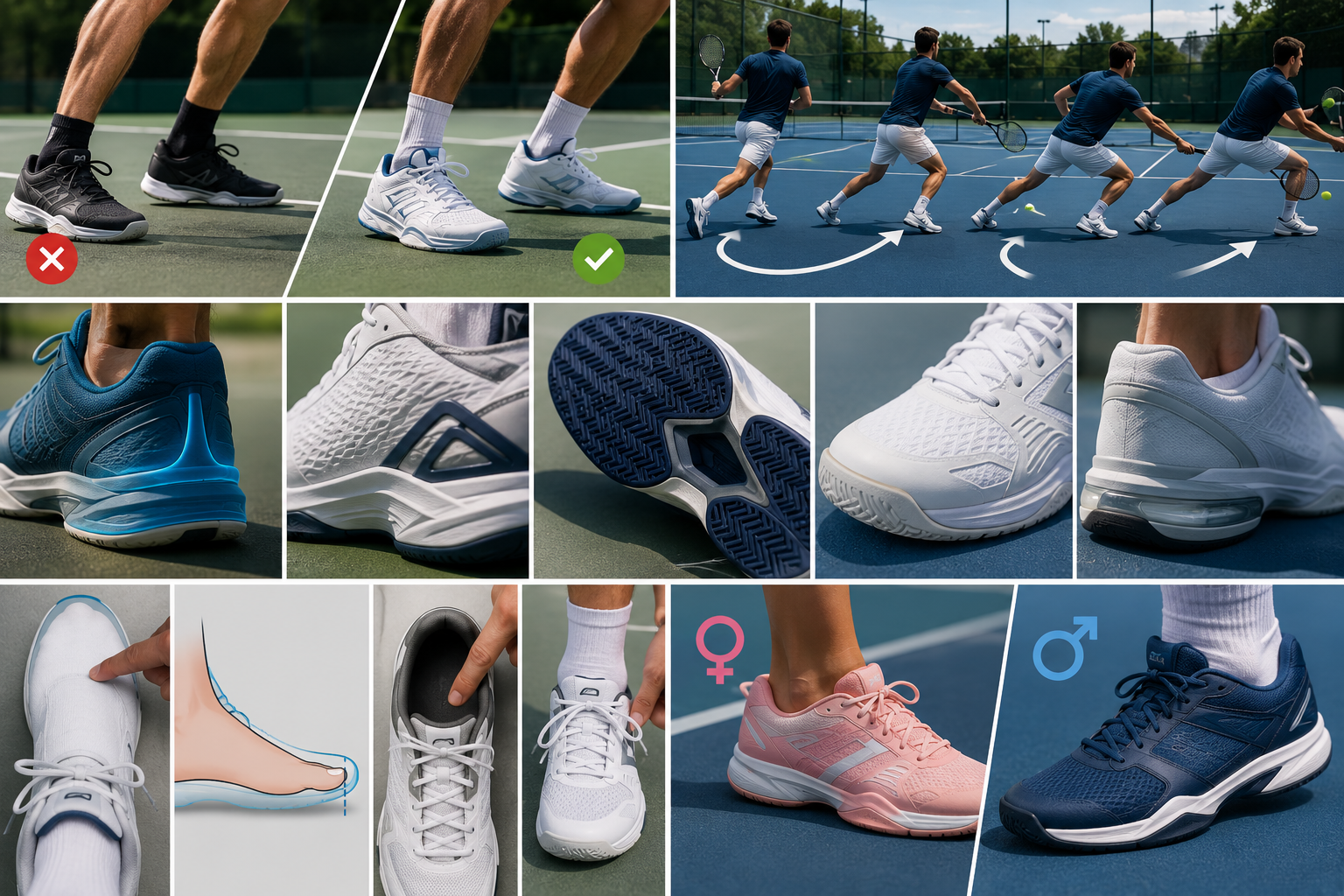
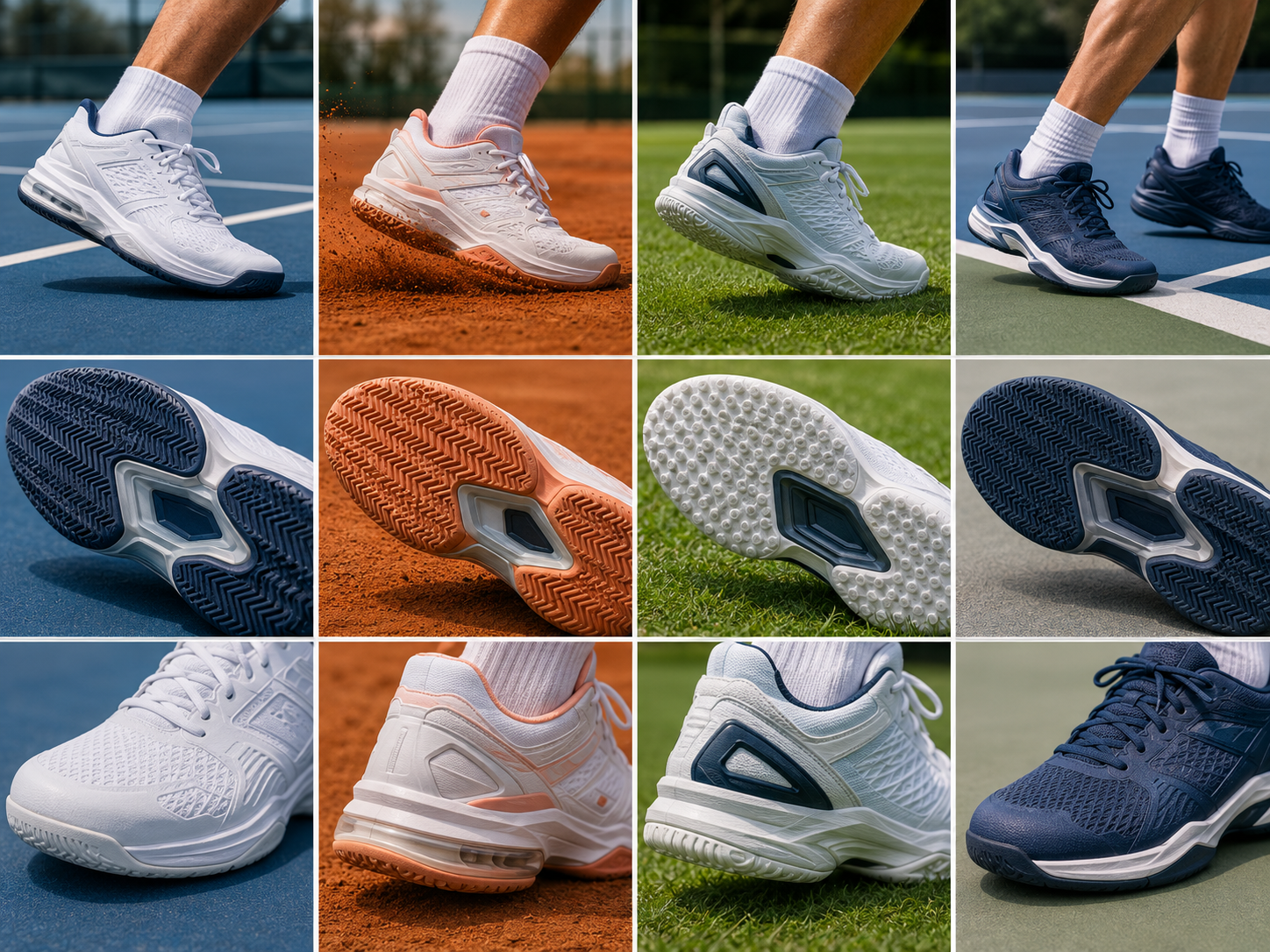
Hard Court Shoes: Maximum Protection
Hard courts are the most common tennis surface worldwide.
They are also the most demanding on the body.
As a result, hard-court shoes typically offer:
- enhanced cushioning;
- durable rubber outsoles;
- increased stability;
- reinforced high-wear areas.
If most of your tennis is played on hard courts, investing in quality footwear is one of the smartest decisions you can make.
Clay Court Shoes: Built for Controlled Sliding
Clay courts require a different approach.
The classic herringbone outsole pattern is instantly recognisable.
This design helps players:
- maintain traction;
- control sliding movements;
- prevent clay from accumulating on the sole.
Sliding is an important part of movement on clay courts, and the right outsole makes a noticeable difference.
What About Grass Courts?
Grass-court shoes feature specialised outsole designs developed for natural grass surfaces.
However, most recreational players rarely play on grass.
Dedicated grass-court shoes are primarily used at clubs and tournaments played on natural grass. For most players, an All Court model is perfectly adequate.
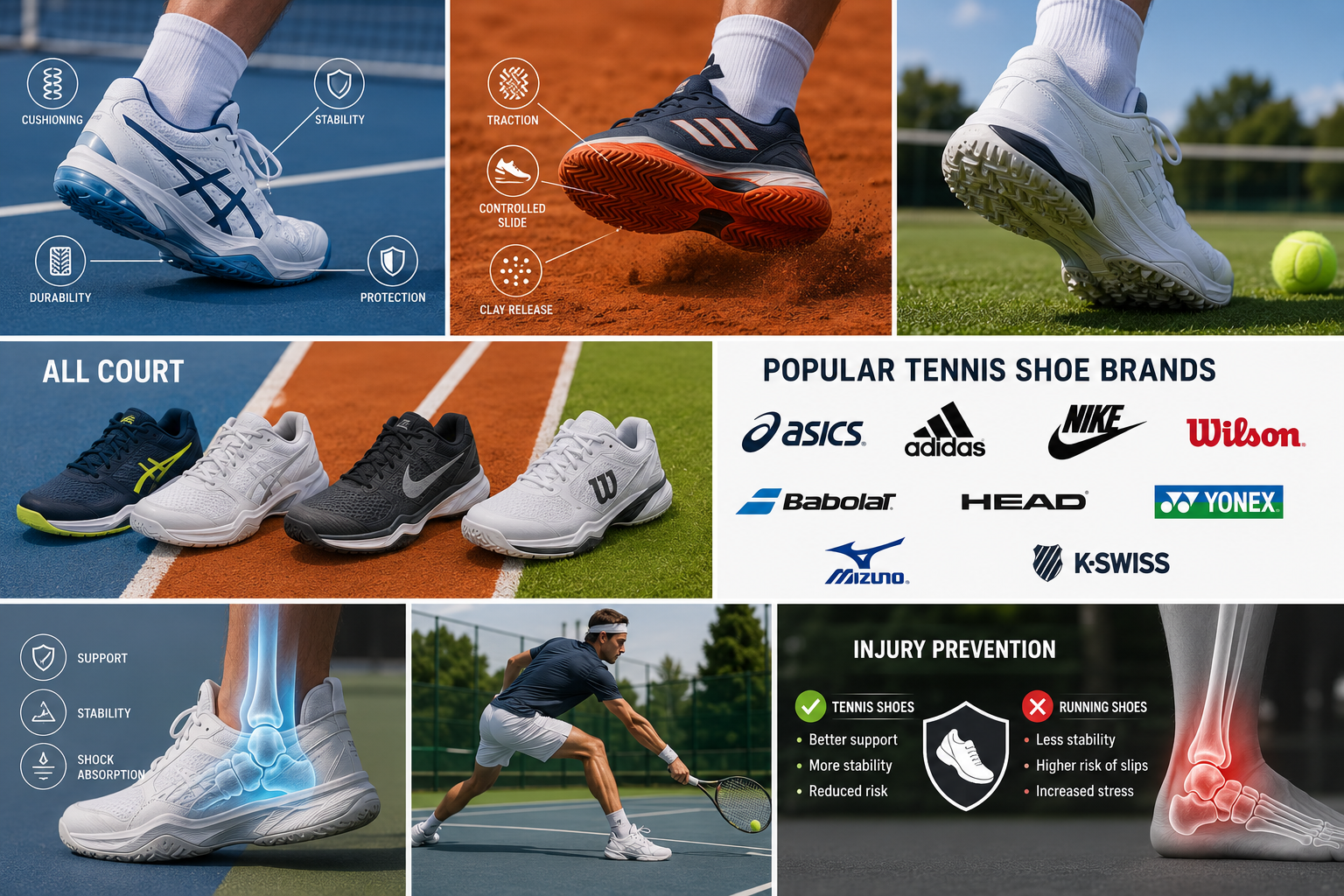
What Does "All Court" Mean?
Many manufacturers offer shoes labelled as All Court.
These models are designed to perform reasonably well across different playing surfaces.
If you're new to tennis or regularly play on a variety of courts, an All Court shoe is often the most practical option.
For many players, it's the ideal starting point.
Which Tennis Shoe Brands Are the Most Popular?
Several brands consistently earn strong reputations among tennis players:
- Asics
- Adidas
- Nike
- Wilson
- Babolat
- Head
- Yonex
- Mizuno
- K-Swiss
Each manufacturer has its own strengths.
Asics is particularly popular among players seeking comfort and cushioning. Adidas and Nike are often chosen for their combination of performance and modern design.
Wilson and Babolat have significantly expanded their footwear ranges in recent years, while Mizuno has developed a strong reputation among advanced players looking for premium fit and excellent court feel.
The reality is that no single brand is perfect for everyone.
The best shoe is the one that suits your foot shape, movement style and personal preferences.
Can Tennis Shoes Help Prevent Injuries?
No tennis shoe can completely prevent injuries.
However, footwear designed specifically for tennis can reduce unnecessary stress on the feet, ankles and knees by providing better support and stability during lateral movements.
Wearing running shoes or general-purpose trainers on a tennis court may increase the risk of slips, ankle sprains and overuse injuries.
Proper footwear should be viewed as one part of a broader approach that includes good technique, sensible training loads and adequate recovery.
When Is It Time to Replace Your Tennis Shoes?
Sometimes a shoe still looks perfectly fine but no longer performs as intended.
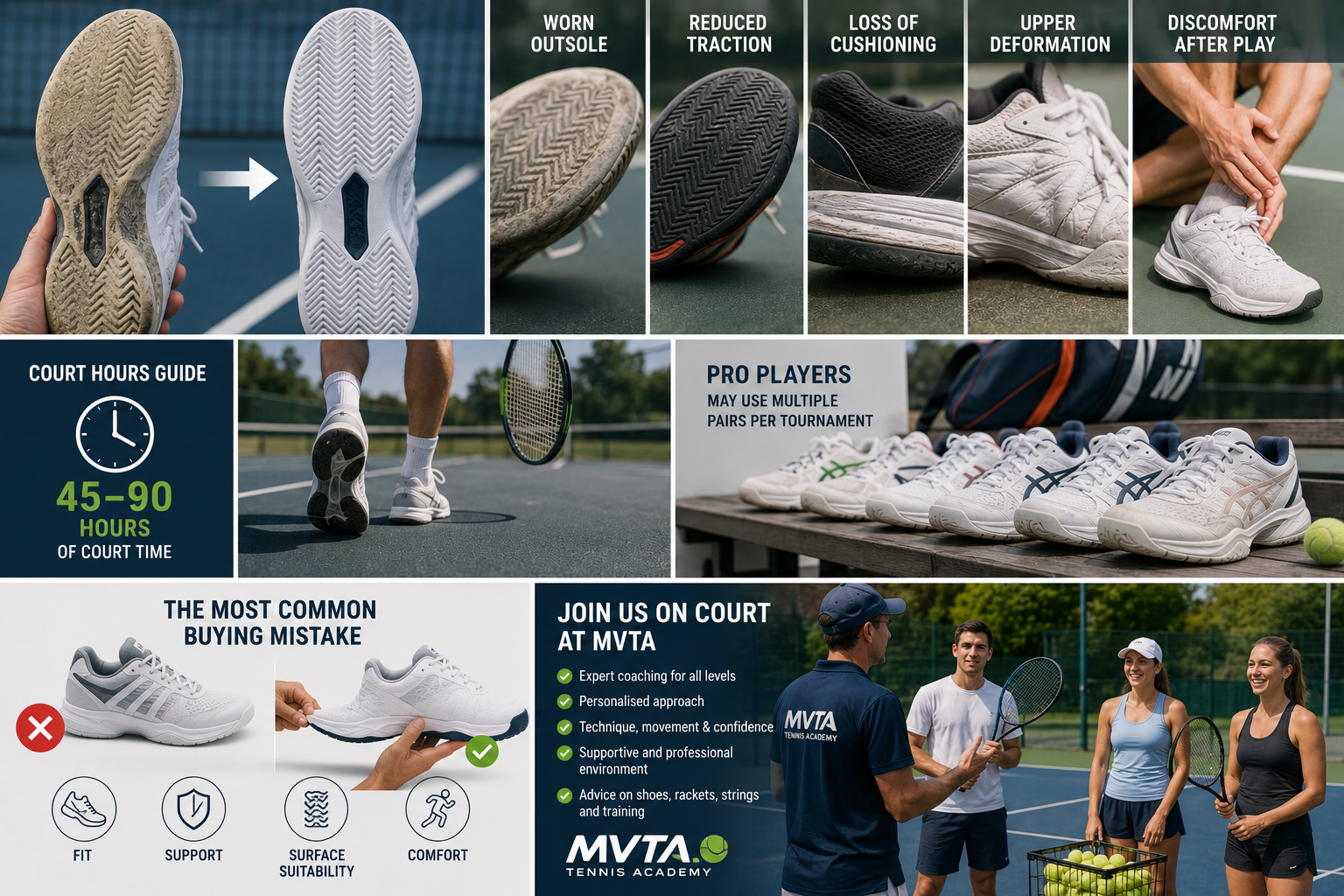
Common signs of wear include:
- a worn outsole;
- reduced traction;
- loss of cushioning;
- deformation of the upper;
- discomfort after play.
Rather than measuring lifespan in months, many specialists prefer to think in terms of court hours.
Tennis shoes typically last between 45 and 90 hours of court time, although actual lifespan depends on the court surface, player weight, movement patterns and shoe construction.
If your shoes no longer provide the same grip, support or comfort as they once did, it's probably time for a new pair.
Interesting Fact
Professional players may use multiple pairs of shoes during a tournament, particularly on hard courts where outsole wear can be significant.
At the highest levels of the game, even a small reduction in traction can affect movement, confidence and performance.
Recreational players don't need to be quite that meticulous, but footwear still plays a crucial role in overall comfort and safety.
The Most Common Buying Mistake
The biggest mistake is choosing tennis shoes based solely on appearance.
A shoe may look fantastic but feel uncomfortable after the first hour on court.
Fit, support and suitability for your preferred playing surface are far more important than the logo on the side.
If a shoe feels comfortable from the start, supports your foot properly and allows natural movement, you're probably on the right track.
Join Us on Court at MVTA
The right tennis shoes can make every step more comfortable, but real improvement comes from quality coaching and consistent practice.
At MVTA, we help players of all levels develop their technique, movement and confidence on court. Whether you're picking up a racket for the first time or preparing for competitive matches, our experienced coaches provide personalised guidance in a supportive and professional environment.
We believe that every player is different. That's why we tailor our coaching approach to individual goals, experience and playing style.
If you would like advice on tennis shoes, rackets, strings or training programmes, our team will be happy to help.
We look forward to seeing you on court at our Tennis Academy.